


Cylindrical Roller Bearing Bulk Supply Guide: MOQ, Lead Time & Quality Control for Importers
 Oct 14, 2026|
 View:59
What MOQ can importers really expect when they buy cylindrical roller bearings in bulk? The answer changes depending on the manufacturer, bearing type, and order details. This Cylindrical Roller Bearing Bulk Supply Guide gives clear benchmarks for order minimums, lead time, and quality control. You will learn negotiation tips that lower buying costs and strengthen your global sourcing network. Every number and tactic here comes from real factory-direct experience. Use these insights to get better terms from any supplier. Whether you order standard types or custom sizes, the same principles apply. You have more power when you understand what factories can actually deliver.
Key Takeaways
You can order standard cylindrical roller bearings in small amounts, starting at 50 units.
Standard bearings can be sent out in just 72 hours if they are in stock.
Custom bearings need 8 to 16 weeks to be made and sent.
Look for ISO 9001 and IATF 16949 certificates to make sure the quality is good.
Try a small first order to ask for lower minimums and reduce your risk.
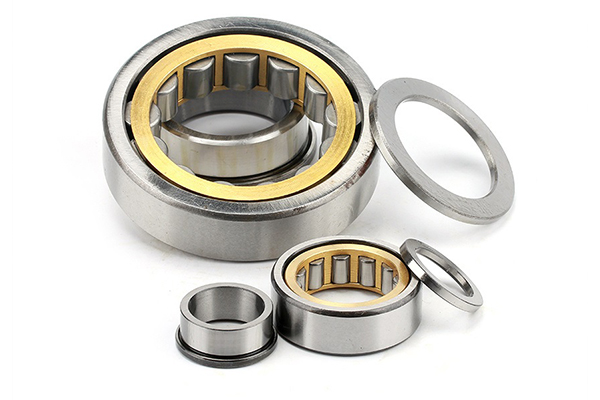
MOQ & Procurement in Cylindrical Roller Bearing Bulk Supply Guide
One China-based manufacturer is a good example. The company keeps minimum order quantity low and helps importers who want to test a market before scaling up. This section shows what you can realistically ask for during procurement.
Debunking Common MOQ Myths
Many importers think every factory demands thousands of pieces. That belief costs you money. The table below compares common assumptions with actual supplier practice.
Widespread Importer Myth | Actual Supplier Practice |
|---|---|
Standard bearings require a 5,000-unit minimum order | Standard in-stock models can be ordered from as few as 50 units |
Lower MOQ means the products are not certified | Orders of any size still carry full ISO 9001 and IATF 16949 certification |
Low-MOQ suppliers have limited product variety | More than 10,000 in-stock SKUs are available, including deep groove ball, tapered roller, and spherical roller bearings |
Custom bearings always need 500+ units | Non-standard dimensions or materials may start at 100 units |
Flexible MOQ causes longer lead times | Standard low-MOQ orders can be dispatched within 72 hours from self-operated warehousing |
Many manufacturers require minimum order quantities that may not fit buyers' needs, and customers often struggle to find manufacturers for obsolete bearings or face long lead times. This supplier says its bearing manufacturing services allow customers to order according to their requirements without hassle, including for ball and cylindrical roller bearings.
Negotiating Lower MOQs
You gain an advantage when you understand how factories price small runs. Standard production sizes usually require about 500–1,000 pieces per size. Custom sizes push requirements to 2,000–5,000 pieces per size because of mold and tooling expenses. Sample orders of 10–50 pieces are often possible at higher unit prices. Use a test order to lower the risk of the partnership, then negotiate a step-up MOQ tied to volume growth. Raise MOQ flexibility before you sign a contract. Frame the trial as a path to larger production orders.
A real case proves the value of this approach. One importer moved from a trading company to factory direct sourcing and cut bulk costs substantially. The savings came from fewer middlemen and better specification control. Factory direct sourcing also improved batch consistency across repeat orders.
One-stop manufacturers make procurement even smoother. They combine in-house production with partner factories. You place one order, and the supplier manages raw material supply, machining, heat treatment, and assembly. This structure reduces your administrative load and shortens the supply chain.
Custom sizes and high-precision grades may require higher MOQs. Plan your budget around that reality. Ask your supplier for a clear breakdown of tooling costs. Then decide whether to share those costs or combine several custom sizes into one order. Both tactics lower the per-size MOQ. Strong traceability and consistent quality make bulk orders safer for your business.
Supply Chain Lead Time Benchmarks
Before you place a bulk order, you need good delivery time estimates. This section gives you real benchmarks from certified production lines.
Typical vs. Optimized Lead Times
ISO-certified production can ship standard cylindrical roller bearings in just 72 hours. That speed comes from self-operated warehousing and in-stock inventory. You skip long waits when you order common in-stock types.
Custom sizes and precision grades take longer; confirm the exact timeline with the factory. Plan your buying schedule with that in mind. Optimized suppliers keep lead times short through controlled supply chain management.
Order Type | Typical Lead Time | Optimized Lead Time |
|---|---|---|
Standard bearings (in stock) | Usually longer than 72 hours | 72 hours |
Custom sizes | Longer than standard | Confirm with supplier |
Precision grades | Longer than standard | Confirm with supplier |
Factors That Affect Lead Time
Several things shape your delivery time. Order volume matters most. Large bulk orders need more production runs. Customization adds engineering and tooling steps. Raw material availability for GCr15/100Cr6 steel affects your schedule. Shipping method also plays a role. Air freight cuts transit time. Sea freight lowers cost but adds weeks.
You can cut lead time without losing quality. Confirm your specifications early. Lock in your order volume before peak seasons. Pick suppliers with in-house production and partner factories. This setup keeps your supply steady. Ask for lead time confirmation in writing before you pay a deposit. Build buffer stock for critical parts. Strong batch consistency and traceability reduce the need for reorders. A stable lead times agreement protects your procurement plan. These steps keep your supply chain moving.
Quality Control for Bulk Orders
Quality decides whether a bulk order helps or hurts your production line. Good factories build quality into every step, not just at the end. A reliable supplier follows IATF 16949 and ISO 9001 standards. These standards guide every stage of making bearings. This cylindrical roller bearing bulk supply guide gives you clear checkpoints you can verify.
Verification Layers and Certificates
The first check is certification. IATF 16949 covers automotive industry rules, and ISO 9001 sets quality management rules. Both require written processes and internal audits. Ask for copies when you check a supplier.
A certificate alone does not mean every part is perfect. The next check is process control. A good factory inspects every bearing at the end and checks each manufacturing step. This stops bad work from moving forward. Each station records its own results, creating a full control trail.
"The Hartford Advanced Product Quality Planning process... embodies the concepts of defect prevention and continuous improvement, rather than defect detection."
The same idea works for cylindrical roller bearings too. Check raw materials, confirm heat treatment, and control size during production. These steps stop problems early and lower the total defect rate.
Material quality needs checking too. The factory starts with GCr15/100Cr6 bearing steel, but you can choose alternative materials. Ask the mill for material and heat-treatment traceability.
Verification element | What you can confirm |
|---|---|
EN 10204 Type 3.1 certificate | Heat number and certificate |
Chemical composition | Analysis matching GB/T 18254 for GCr15 |
Hardness after heat treatment | 62-63 HRC with ±1 HRC uniformity |
Internal soundness | Ultrasonic inspection per ASTM A388 |
Decarburization depth | 0.18 mm versus 0.3 mm limit |
Missing documents or traceability should raise concern. Ask for a sample inspection report before you sign.
Practical Steps for Quality Assurance
You don't have to be a bearing engineer. Use these steps.
Check that the factory has ISO 9001 and IATF 16949 certificates.
Test samples before you commit to a large order.
Hire a third-party inspection company such as SGS or Bureau Veritas.
Visit the factory and review its process controls.
After import, check bearings with vibration and visual methods.
Your buying contract should specify your right to inspect. Bulk orders need closer watching. Batch inspection data gives you another check. Check bearing internal clearance and runout against the stated tolerance class. Require lot-level inspection. Good factories provide this data for every lot. It supports size and shape control. A complete bearing inspection plan includes these checks. Ask the factory if it tests under realistic load and speed conditions. Vibration testing catches damage that size checks cannot. Compare the answers with the data you requested.
Inspection and traceability documents protect your buying process. Require full lot documents for rings, rollers, and cages. Each batch must link to the exact heat of raw steel and assembly date. Laser-etched lot numbers make tracking easier. Good traceability documents prevent customs delays.
A reliable factory combines 100% inspection with strong ERP systems. This gives repeatable quality across batches. Factory-direct sourcing improves specification control. It also strengthens batch consistency across repeat orders. Regular batch consistency protects your supply chain.
Use this data when you plan purchases. Choosing suppliers wisely builds long-term supply stability. Choose a supplier with full documentation. This makes buying decisions easier and improves supply reliability. You can expect zero quality problems, zero disruptions, defect-free products, and on-time delivery.
Certified Chinese manufacturers today show that you can have low MOQs, fast lead times, and strong quality control all at once. Factory-direct buying gives you more freedom to adjust. Smart buying plans lower costs and make your supply chain stronger. Certified partners make your supply network more reliable. Traceability and batch consistency keep every order safe. China is a major player in global bearing exports, and the global bearing market continues to expand. This cylindrical roller bearing bulk supply guide proves that the right supplier makes global sourcing easy. You can count on certified Chinese manufacturers to deliver dependable results. Begin your next procurement with confidence.
FAQ
What is the usual MOQ for standard cylindrical roller bearings?
Standard in-stock models can start from as few as 50 units. Custom sizes may need 100 units or more. Your buying plan should confirm exact minimums with the factory before you order.
How fast can a supplier ship a bulk order?
ISO-certified production can send standard bearings in as little as 72 hours from self-operated warehousing. Custom sizes and precision grades take longer; confirm the timeline with the factory. Plan your supply schedule around these benchmarks.
What certifications should I check before placing an order?
Look for IATF 16949 and ISO 9001 certificates. These standards require written processes and internal audits. A reliable supplier gives you these documents and does 100% final inspection on every bearing.
How do I ensure quality across a large bulk order?
Ask for lot-level inspection data and material traceability documents. Hire a third-party inspector like SGS or Bureau Veritas. Your buying contract should state your right to inspect before shipment.
Can I lower my MOQ without paying higher prices?
Yes. Start with a small test order at a higher unit price. Then negotiate a step-up MOQ tied to volume growth. This approach lowers your risk and builds a stronger supply partnership over time.
Recommended Products

Nup315 Cylindrical Roller Bearing Single Row | 75x160x37 bearing

Tapered Roller Bearing Factory Needle Roller Bearing Cylindrical Roller Bearing Track Roller Bearing IATF16949 Auto Bearing

Nup2307e Cylindrical Roller Bearing Single Row | 35x80x31 bearing

Double Cylindrical Roller Bearing Planetary Bearing Rnn32X46.6X28V for Brevini

Nj313e Cylindrical Roller Bearing Single Row | 65x140x33 bearing

Full Complement Nup Cylindrical Roller Bearing Single Row

Thrust Cylindrical Roller Bearing Axial Bearing with GS Ws

Nup217 Radial Cylindrical Roller Bearing 85x150x28 mm

Nj2210e Single Row Cylindrical Roller Bearing 50x90x23mm

Radial Cylindrical Roller Bearing for Z F 0750 118 019 Rn606m


Recent News
1.What are the applications of 4 row cylindrical roller bearings
2023-12-222.How to choose double cylindrical roller bearing
2023-12-283.HECB: The Leading Manufacturer of Cylindrical Roller Bearings
2024-04-114.cylindrical roller bearing supplier Why choose HECB?
2024-07-195.HECB: Your Trusted factory for Cylindrical Roller Bearings
2024-07-226.What is a double cylindrical roller bearing?
2024-08-207.The best cylindrical roller bearing manufacturers in china-HECB
2024-08-278.What is a cylindrical roller bearing used for?
2024-12-049.How do you remove a cylindrical roller bearing?
2024-12-1210.What is the difference between cylindrical roller bearing and taper roller bearing
2025-01-03

