


Needle Roller and Cage Assemblies Bulk Order Guide: Specifications, Packaging & Traceability for Resellers
 Oct 21, 2026|
 View:
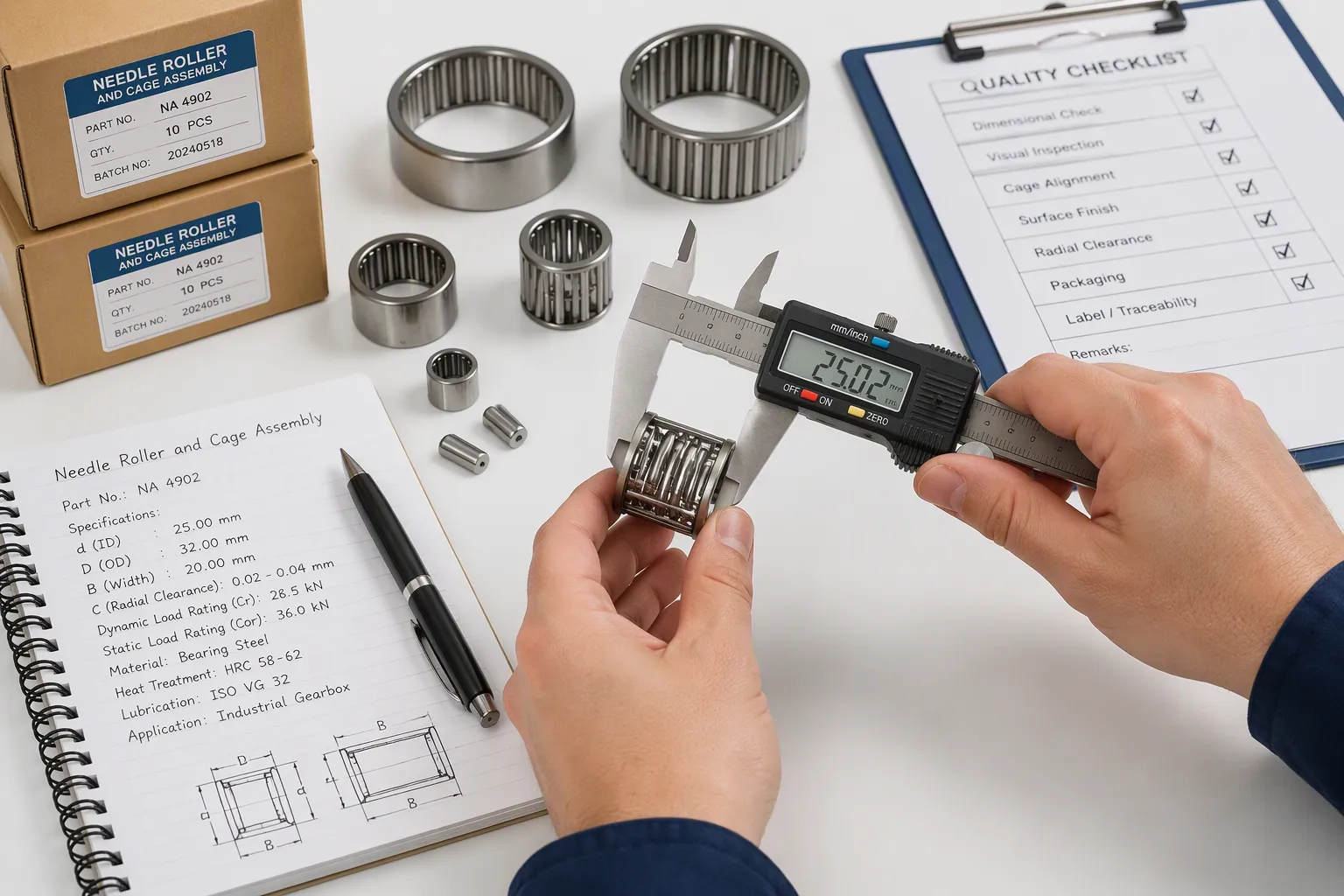
One wrong specification, a broken carton, or a missing document can turn a volume discount into returns and lost customers. Resellers take on that risk with every bulk purchase.
This needle roller and cage assemblies bulk order guide gives a reseller three checkpoints. First, confirm specifications before ordering: bore, width, tolerance class, and assembly fit. Second, pick packaging that protects the bearings and keeps freight cost under control. Third, check traceability and compliance, so each lot links back to supplier inspection records and forward to the customer's order.
A working checklist turns these checkpoints into routine steps for resellers. Use it on the next purchase order, and bearing quality becomes a repeatable process, not a hope.
Key Takeaways
Check the bore, width, tolerance class, and assembly fit before you place your order.
Match the dynamic and static load ratings to the application so you avoid early failures.
Pick packaging that protects the parts and keeps shipping costs low.
Choose barrier films based on the threats they face, such as moisture, dust, or chemicals.
Ask for inspection reports and certificates before shipment to avoid delays.
Train staff to read batch marks. They should link each lot to an order and an inspection record.
Check with suppliers about certifications like IATF 16949 and ISO 9001.
Use a written checklist for every bulk order to build trust and get repeat business.
Needle Roller and Cage Assemblies Bulk Order Guide: Specifications
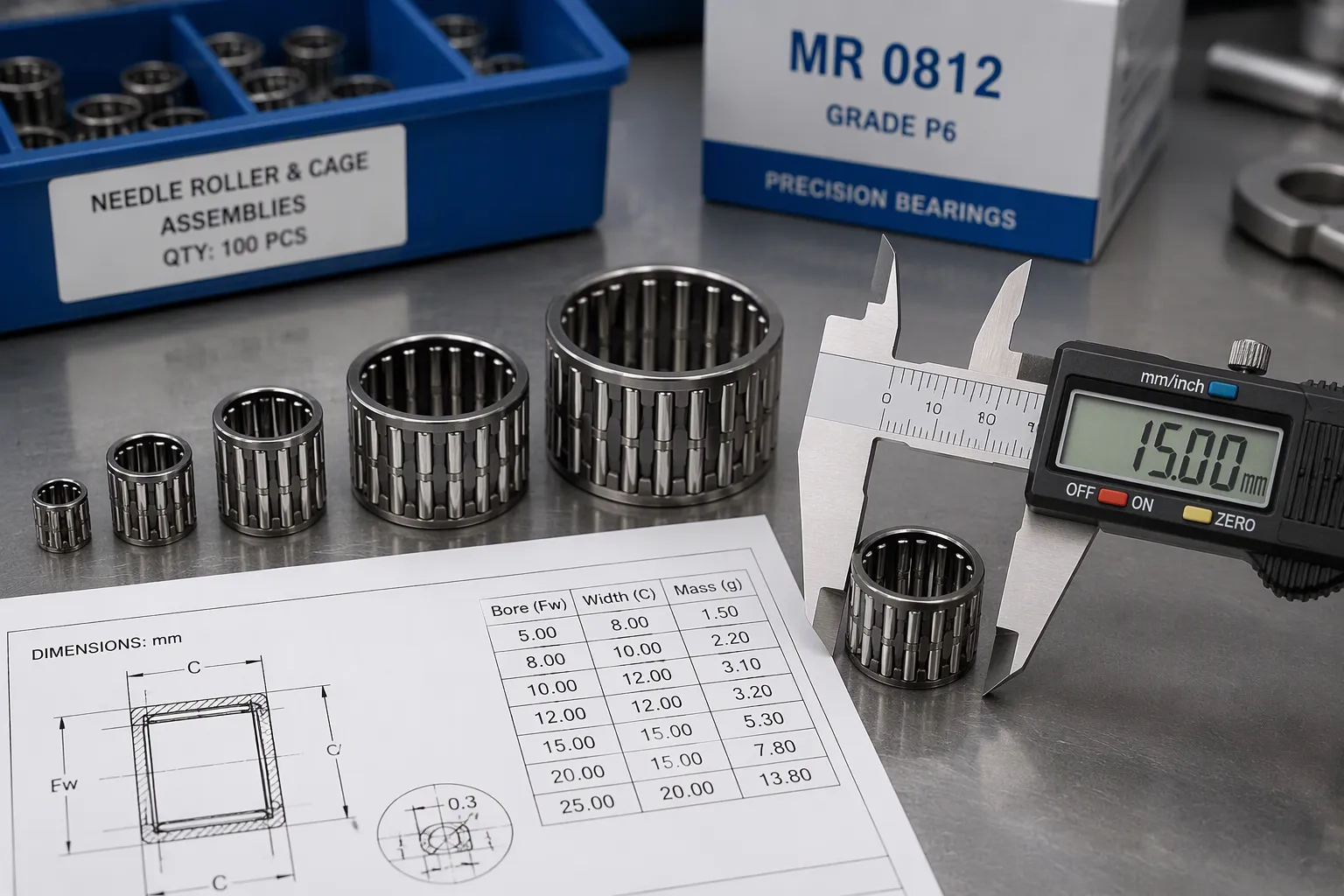
A needle roller and cage assembly is a complete unit that is ready to mount. In the right applications, the shaft and the housing bore act as the raceways. This means the assembly adds stiffness without adding radial height. Common bore sizes run from 3 mm to 127 mm (1/8 to 5 in). This range covers most reseller demand, from small gearbox units to heavy industrial positions.
Roller grade deserves a close look. G2 is a standard needle roller grade. The sort is printed on the packaging and color coded. This lets a buyer confirm the grade without opening the pack. Standard roller diameters run from 1.5 mm to 5 mm. These details belong in the purchase order, not in a verbal agreement.
Dimensions and Load Ratings
Bore, Outside Diameter, and Width
Bore, outside diameter, and width form the first checkpoint. A reseller should confirm all three against the drawing before release. The bore must match the shaft diameter. The outside diameter must match the housing bore. Width affects lateral space and retention. One mismatched dimension turns a full lot into scrap or returns.
Dynamic and Static Capacity
Dynamic capacity governs fatigue life under rotation. Static capacity governs permanent deformation under heavy or stationary loads. A reseller should match capacity to the application, not to the lowest price. A lightly rated unit in a heavy-load position fails early. The return cost then lands on the reseller.
Tolerances and Materials
Tolerance Classes and Fits
Tolerance control decides how the assembly seats on the shaft and in the housing. A loose fit allows creep and wear. A tight fit distorts the raceway. The table below lists the shaft and housing requirements a reseller must confirm before ordering.
Specification | Requirement |
|---|---|
Raceway hardness (shaft & housing) | 58–64 HRC |
Surface finish | Ground to Ra 0.2–0.4 µm |
Geometry | Flat and square to the shaft axis |
Lateral retention / guidance | Cage guided on one side only; GS washer on shaft; WS washer in housing; double guidance discouraged |
Washer orientation | Ground faces toward rollers |
Unhardened/aluminum housings | Dedicated AS, GS, WS, or LS washers mandatory |
Common configured specifications include metric standard size, single row raceway, steel inner and outer race material, and JIS precision grade 0. Each option fits a different job. JIS grade 0 suits general industrial positions. Tighter tolerance classes suit precision spindles and high-speed shafts. Neither choice is better in every case.
Cage and Roller Materials
Cage material affects strength, speed limits, and lubrication behavior. Steel and polymer cages both offer high strength and robust construction. Both suit high-load and high-speed applications. Both stay reliable under extreme stress and unfavorable conditions. Externally guided crank pin assemblies often use quenched and tempered steel cages. These cages resist wear and carry large guidance surfaces for optimum lubrication. Internally guided piston pin assemblies often use case hardened steel cages. These cages show low wear and long wear life under high-frequency oscillating loads. The same logic applies to a ball retainer or a ball bearing cage in other product lines: material follows duty. A reseller should record the cage material on the order. The retainer choice changes lead time and price.
Lubrication and Application Fit
Lubrication States for Bulk Supply
Bulk orders usually arrive dry, greased, or oiled. Grease is common for needle roller bearings. Oil is required for high-speed or high-temperature positions. The lubrication state must appear on the order line. It affects shelf life, pack format, and handling. A dry unit and a greased unit are not interchangeable at the dock.
Matching Lubrication to Operating Conditions
Lubricant choice follows four inputs: bearing type, operating temperature, operating speed, and operational load. High-speed and high-temperature positions call for synthetic base oils with thermal stability. Severe loads and vibratory conditions call for greases with EP additives and robust thickeners such as lithium soap. Delivery method matters too. Drip-feed suits smaller, lighter, slower applications. Splash-feed suits high-speed, high-temperature horizontal setups. Force-feed suits heavy-load or high-speed positions. The same rules apply to thrust needle roller and cage assemblies and to cylindrical & needle roller lines. A reseller who confirms these specifications up front protects both margin and reputation. This needle roller and cage assemblies bulk order guide treats each specification as a checkpoint. That habit serves every order.
Bulk Packaging for Safe, Cost-Effective Delivery
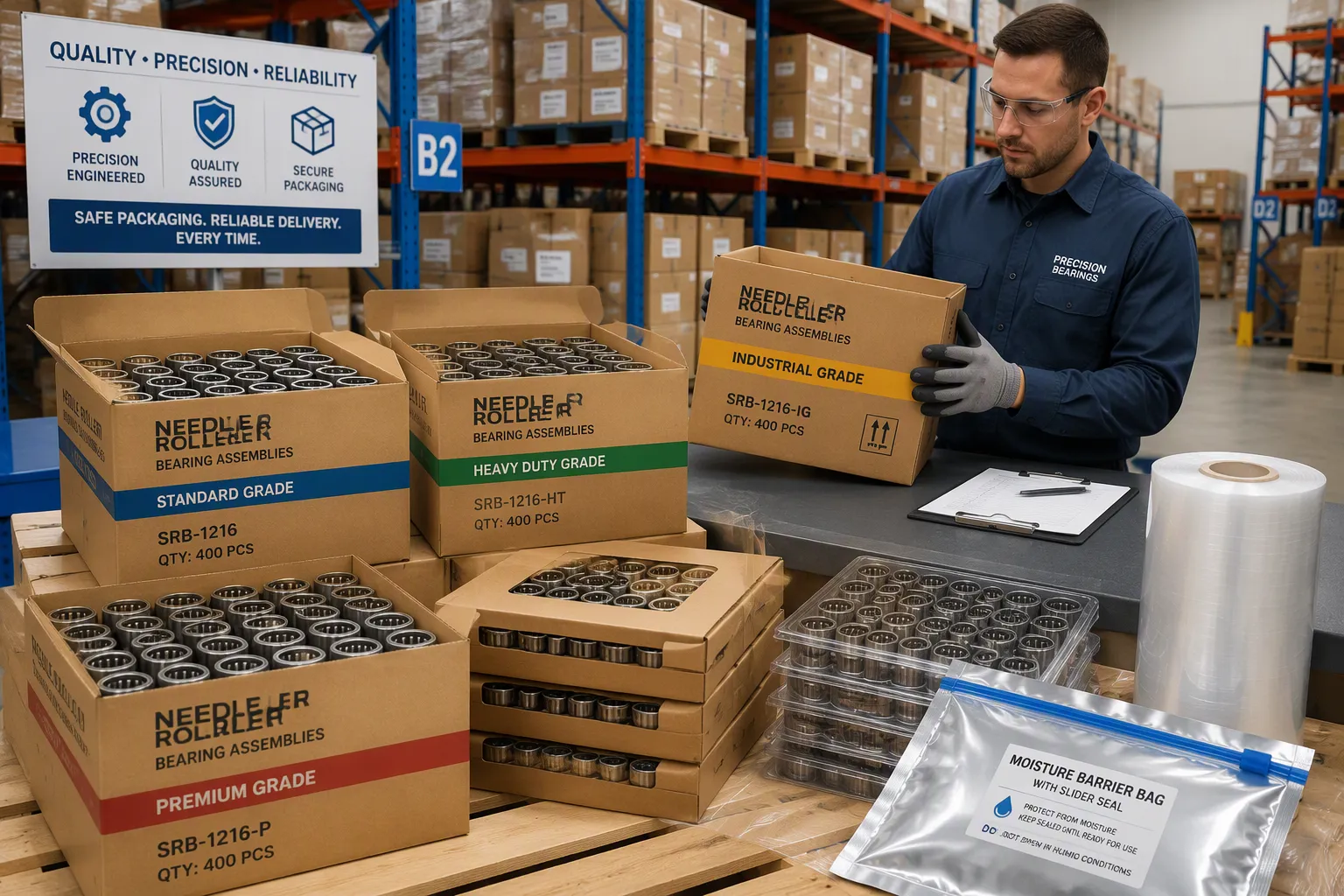
Packaging does two jobs on a bulk order. It protects the parts, and it shows what is inside. Roller grade marks and color codes must stay easy to see and read on bulk packs. If a buyer cannot read the G2 sort mark on the carton, they must open the pack to check it. That adds handling risk and slows down receiving. Good packaging keeps the label readable from the outside.
Common Bulk Packaging Formats
Cartons, Sleeves, and Tray Packs
Cartons work well for mixed orders and small to medium amounts. Sleeves work well for single-size runs and stack neatly on a pallet. Tray packs work well for automated handling and fast counting at the dock. Each format fits a different job. A reseller with a fast-selling item may prefer tray packs for speed. A reseller with slow-selling stock may prefer cartons for flexibility. The order line should name the format, so the supplier packs to the same standard every time.
Protected versus Loose-Pack Configurations
Protected packs wrap each assembly in a barrier layer. Loose packs put units straight into the carton. Protected packs work well for long-term storage and sea freight. Loose packs work well for quick resale, where the buyer moves stock fast. Private-label needs add a third path: plain packs with the reseller's own label. Each setup has a place. The right choice depends on storage time, transit mode, and sales channel, not one default rule.
Contamination and Damage Protection
Moisture, Dust, and Corrosion Barriers
Barrier film choice depends on the threat. The table below matches common materials to their protective features.
Barrier Material | Protective Feature |
|---|---|
LDPE | Dust-proof |
LLDPE | Moisture-resistant |
HDPE | Puncture-resistant |
CPE | Vent holes |
PVC | Airtight slider seal that blocks humidity and condensation |
EVA | High-density film barrier against chemical fumes and corrosive air |
A reseller should match the film to the route. A humid sea route needs a moisture barrier. A dusty warehouse needs a dust barrier. A chemical plant nearby needs a fume barrier. One film rarely covers every case.
Handling and Transit Controls
Protection continues past the film. A reseller should apply these controls as a routine sequence:
Apply protective coatings and use corrosion-resistant materials for corrosive environments.
Use seals that block moisture entry, and pick lubricants with anti-corrosive properties.
Cushion the bearings against shock and vibration, and seal the packaging against moisture and contaminants.
Store stock in clean, dry, temperature-controlled areas, in original packaging, laid flat, away from direct sunlight and moisture.
Keep storage areas free of dust, chemicals, and harmful substances, and add covers or sealed containers as extra barriers.
These steps protect the assembly from the dock to the customer's shelf. They also protect the reseller from claims.
Packaging Cost Considerations
Unit Cost versus Protection
Cheaper packaging lowers the unit cost. It also raises the risk of transit damage and returns. A reseller should weigh the pack cost against the value of the lot and the cost of one return. High-value lots justify a stronger barrier. Low-value, fast-moving lots may justify a simpler pack. The goal is fit, not maximum protection at any price.
Freight and Storage Efficiency
Packaging affects freight volume and warehouse space. Flat sleeves and nested trays cut empty space in a container. Bulky packs raise freight cost and fill rack space. A reseller should ask the supplier for pack dimensions and pallet counts before release. These figures feed the freight quote and the storage plan. They also help with compliance checks at receiving, where the lot must match the order and the inspection record.
Packaging decisions belong in the same checklist as specifications and tolerance checks. A reseller who plans packaging up front protects quality, controls cost, and keeps every lot traceable. This needle roller and cage assemblies bulk order guide treats packaging as a checkpoint, not an afterthought. The next section covers traceability and compliance in the same practical way.
Traceability and Compliance for Resellers
Traceability records let resellers connect a delivered lot back to inspection records and forward to the customer's order. This chain protects both sides of a bulk deal.
Documentation for Bulk Orders
Certificates and Inspection Records
Suppliers issue inspection reports after production ends. Buyers may ask for extra quality documents, such as material certificates, dimensional inspection reports, and functional inspection reports. A complete document set for a bulk order usually includes sample approval documentation, inspection reports, material certificates, batch traceability records, and customized labeling. Resellers should confirm this list at the quotation stage. Missing paperwork at the dock delays customs clearance and customer delivery.
Pre-Shipment Verification
Pre-shipment verification closes the gap between production and delivery. Resellers should ask for the inspection report before the supplier releases the goods. The report should match the order line on specifications, tolerance, and quantity. A quick cross-check against the purchase order catches errors while the lot is still at the factory. This step costs little and prevents costly rework later.
Batch Coding and Lot Tracking
Reading Batch Marks
Batch marks carry the production date, machine ID, and material batch. Resellers should train receiving staff to read these marks when goods arrive. A clear mark on the packaging helps with fast verification. Marks that are hard to read or missing point to a traceability gap that deserves a supplier query.
Linking Lots to Orders
Each delivered lot should map to one order line and one inspection record. Material traceability depends on this link. A reseller who can trace a bearing from steel batch to customer order resolves complaints quickly. This traceability chain also supports warranty claims and repeat orders.
Vetting a China Thrust Needle Roller Bearing Supplier
Certifications and Inspection Practices
A china thrust needle roller bearing supplier should show a documented quality inspection system. The table below lists checks that apply to any industrial thrust bearing supplier.
Category | Item | Detail |
|---|---|---|
Certification | IATF 16949 | Held to the same standard across facilities |
Certification | ISO 9001 | Quality management system certificate |
Certification | ISO 14001 | Environmental management certificate |
Inspection | Dimensional inspection | CMMs and laser micrometers verify geometry across the full run |
Traceability | Full lot traceability | Every product traceable from raw material to finished goods |
HECB serves as a neutral example of these criteria: more than 20 years of manufacturing and exporting experience, IATF16949 certification, 100% product inspection, and over 99% on-time delivery. Resellers should also review production capacity and equipment during a factory audit.
Building a Compliance File
A compliance file holds certificates, inspection records, and batch records for each supplier. Resellers should apply a five-point factory checklist: certification validity, inspection coverage, traceability depth, production capacity and equipment, and audit access. This file supports supplier capability reviews and customer audits. Strong compliance records reduce reorder friction and build buyer confidence.
Before you order, check the bore, width, tolerance class, and assembly fit. When you pick packaging, balance part protection against freight and storage costs. Traceability checks tie each lot to inspection records and customer orders.
Resellers should turn these three checkpoints into a checklist to use before ordering. Use it on the next bulk purchase, and confirm each item with the supplier before release. A written checklist keeps compliance visible at every step.
Doing these things the same way every time builds customer trust. It also makes reorders smoother, because buyers know what to expect. Good habits turn one bulk order into a repeat account.
FAQ
What bore range do needle roller and cage assemblies cover?
Common bore sizes go from 3 mm to 127 mm (1/8 to 5 in). This range covers most reseller demand, from small gearbox units to heavy industrial positions. A reseller should check the bore against the shaft drawing before release.
What does the G2 marking on the packaging mean?
G2 is a standard needle roller grade. The sort is printed on the packaging and color coded, so a buyer can confirm the grade without opening the pack. Standard roller diameters go from 1.5 mm to 5 mm.
How hard must the shaft and housing be?
The raceway surfaces need 58–64 HRC and a ground finish of Ra 0.2–0.4 µm. They must also sit flat and square to the shaft axis. A reseller should confirm these values with the customer before ordering.
Can a buyer skip the washers in an unhardened housing?
No. Unhardened or aluminum housings require dedicated AS, GS, WS, or LS washers. The cage should be guided on one side only, and the ground washer faces must point toward the rollers. Double guidance is discouraged.
Which lubrication state should a bulk order specify?
Bulk orders usually arrive dry, greased, or oiled. Grease suits most needle roller positions. Oil suits high-speed or high-temperature work. The order line must name the state, because dry and greased units are not interchangeable at the dock.
How does a reseller verify a supplier's quality system?
A reseller should check certification validity, inspection coverage, traceability depth, production capacity, and audit access. HECB offers a neutral example: more than 20 years of manufacturing and exporting experience, IATF16949 certification, 100% product inspection, and over 99% on-time delivery.
What documents belong in a bulk order file?
A complete set includes sample approval documentation, inspection reports, material certificates, batch traceability records, and customized labeling. Resellers should confirm this list at the quotation stage. Missing paperwork at the dock delays customs clearance and customer delivery.
How does lot tracking support customer claims?
Each delivered lot should map to one order line and one inspection record. This link lets a reseller trace a bearing from steel batch to customer order. Fast resolution of complaints depends on that chain, and it also supports warranty claims and repeat orders.
Traceability records, inspection reports, and batch marks form one chain. A reseller who checks that chain at receiving protects both margin and reputation. The same discipline applies to every order line, from a single carton to a full container.

