


What is the difference between cylindrical roller bearing and taper roller bearing
 Jan 03, 2025|
 View:1292
Bearings are crucial components in machinery, allowing for smooth movement and reducing friction between moving parts. Among the many types of bearings, cylindrical roller bearings and taper roller bearings are two of the most commonly used. Each type has unique characteristics, advantages, and applications. This article delves into the differences between cylindrical roller bearings and taper roller bearings, providing insights into their design, operation, and use cases.
1. Basic Definition
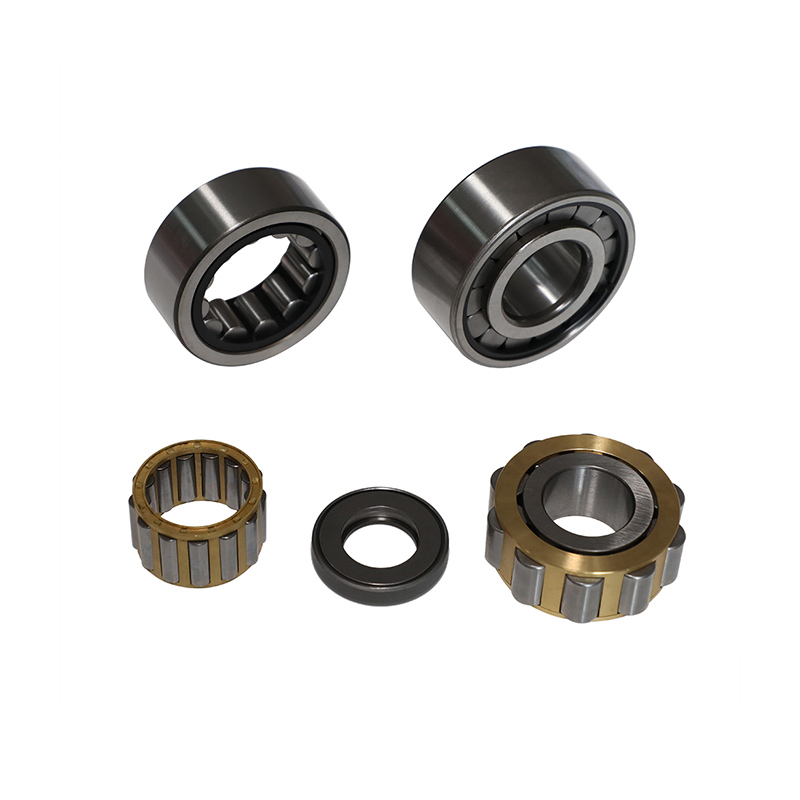
Cylindrical Roller Bearings: These bearings consist of cylindrical rollers that are arranged in a way to provide a linear contact area with the inner and outer rings. They are designed to handle radial loads and are often used in applications where high radial load capacity is required.
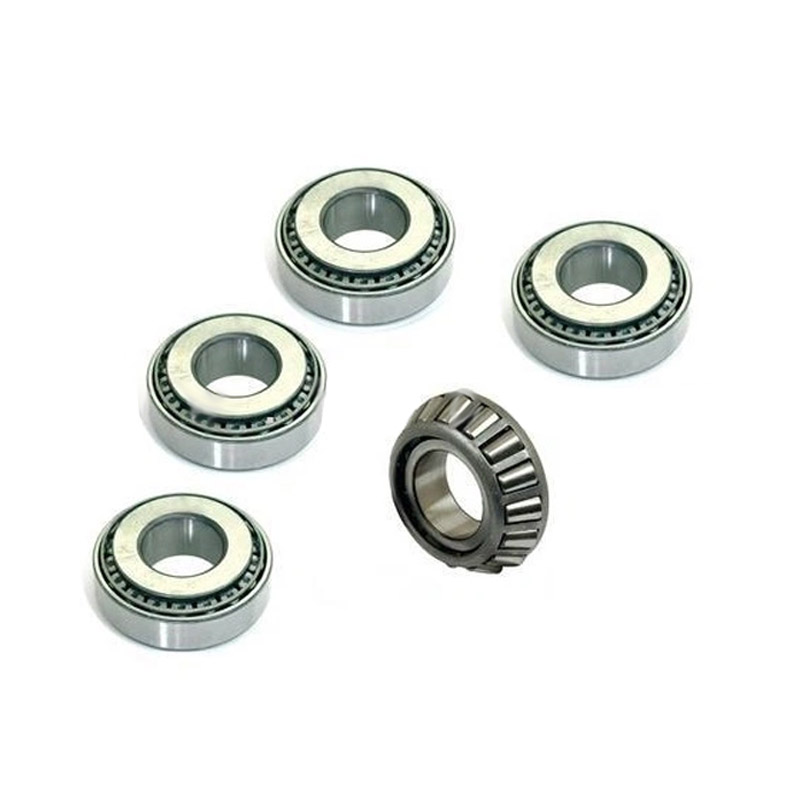
Taper Roller Bearings: These bearings are designed with tapered inner and outer ring raceways, allowing for the rollers to be positioned at an angle to the axis of the bearing. This design enables them to handle both radial and axial loads, making them suitable for applications where combined loads are present.
2. Design and Structure
Cylindrical Roller Bearings:
Roller Shape: The rollers are cylindrical and of equal diameter, providing a large contact area with the raceways.
Raceway Design: The inner and outer raceways are typically parallel, which allows the rollers to roll freely.
Configuration: They can be found in various configurations, including single-row, double-row, and multi-row designs.
Taper Roller Bearings:
Roller Shape: The rollers are tapered, resembling a cone. This taper allows for better distribution of loads.
Raceway Design: The inner and outer raceways are tapered, meeting at a point, which helps accommodate both radial and axial loads.
Configuration: They are available in single-row, double-row, and four-row configurations, with the single-row being the most common.
3. Load Capacity
Cylindrical Roller Bearings:
Primarily designed for radial loads, they have a high radial load capacity due to the large surface area of the cylindrical rollers.
They can also support some axial loads, but their axial load capacity is limited compared to taper roller bearings.
Taper Roller Bearings:
Designed to handle both radial and axial loads, taper roller bearings are more versatile in applications where combined loading is common.
The tapered design allows them to effectively manage thrust loads, making them suitable for applications like automotive wheel bearings.
4. Friction and Speed
Cylindrical Roller Bearings:
Generally exhibit lower friction due to the line contact between the rollers and raceways, making them suitable for high-speed applications.
The absence of gearing between rollers allows for smooth operation, reducing wear.
Taper Roller Bearings:
Have higher friction compared to cylindrical roller bearings due to the point contact between the taper rollers and raceways.
While they can still support moderate speeds, they are typically not as efficient in high-speed applications as cylindrical roller bearings.
5. Applications
Cylindrical Roller Bearings:
Commonly used in electric motors, gearboxes, and heavy machinery where high radial loads are present.
Ideal for applications in industries like mining, construction, and automotive.
Taper Roller Bearings:
Widely used in automotive applications, particularly in wheel hubs and transmissions, where both radial and axial loads are present.
Also found in industrial machinery, agriculture equipment, and railway applications due to their ability to handle combined loads.
6. Installation and Maintenance
Cylindrical Roller Bearings:
Installation is relatively straightforward, as they can be mounted directly onto shaft housings without special considerations for axial positioning.
Maintenance primarily involves lubrication and periodic inspection, which is generally easy due to their design.
Taper Roller Bearings:
Installation requires careful alignment and adjustment, especially to achieve the correct axial preload. This is essential for optimal performance.
Maintenance can be more complex, as it may involve adjusting the preload and ensuring proper lubrication to prevent overheating.
7. Cost Considerations
Cylindrical Roller Bearings:
Typically less expensive than taper roller bearings, making them a cost-effective choice for applications where only radial loads are present.
Their simplicity in design often translates to lower manufacturing costs.
Taper Roller Bearings:
Generally more expensive due to their complex design and versatility in handling both radial and axial loads.
The added functionality justifies the higher cost in applications that require it.
8. Performance Factors
Cylindrical Roller Bearings:
They excel in high-speed applications and environments with limited axial loading, offering low friction and efficient operation.
Their performance can degrade under excessive axial loads, which may lead to premature failure.
Taper Roller Bearings:
Provide robust performance in applications with mixed loading conditions, making them ideal for heavy-duty applications.
Their performance may decrease at higher speeds due to increased friction, so they are generally not recommended for high-speed applications.
9. Durability and Lifespan
Cylindrical Roller Bearings:
Known for their durability in radial load applications, they typically have a long lifespan when properly maintained.
The wear and tear are usually minimal due to the line contact design, leading to less frequent replacements.
Taper Roller Bearings:
While they are durable, their lifespan can be affected by incorrect installation, especially concerning axial preload.
Proper maintenance and alignment are crucial to maximize their operational life.
In summary, cylindrical roller bearings and taper roller bearings serve distinct purposes in various applications, each with its own set of advantages and limitations.
Cylindrical roller bearings are ideal for high-speed applications with primarily radial loads, offering low friction and ease of maintenance. They are cost-effective for applications not requiring axial load support.
Taper roller bearings, on the other hand, provide the versatility needed for applications involving both radial and axial loads, making them suitable for automotive and heavy machinery uses. While they can be more complex to install and maintain, their ability to handle mixed loading conditions makes them indispensable in many industries.
Choosing the right bearing type ultimately depends on the specific requirements of your application, including load conditions, speed, and installation considerations. Understanding these differences will aid in selecting the most suitable bearing for your machinery, ensuring optimal performance and longevity.
Recommended Products


Recent News
1.What are the applications of 4 row cylindrical roller bearings
2023-12-222.How to choose double cylindrical roller bearing
2023-12-283.What is a double cylindrical roller bearing?
2024-08-204.How to install 4 row taper roller bearing
2023-12-265.Recent Developments in 4 Row Taper Roller Bearings: Innovations and Applications
2024-09-106.What is a taper roller bearing best suitable for?
2024-11-06

