Stud roller bearings, also known as needle roller bearings, are a type of rolling element bearing that are characterized by their cylindrical, needle-like rollers. These bearings are designed to handle high loads in a compact space, making them ideal for applications where space is at a premium and high performance is required.
Stud roller bearings are composed of a series of cylindrical rollers that are smaller in diameter than the balls used in ball bearings. These rollers are mounted on a stud or shaft, which serves as the inner ring of the bearing. The outer ring is typically a washer or a housing that can be attached to a machine's structure. The design of stud roller bearings allows for a high load capacity in a small envelope, which is one of the main reasons for their popularity in various industries.
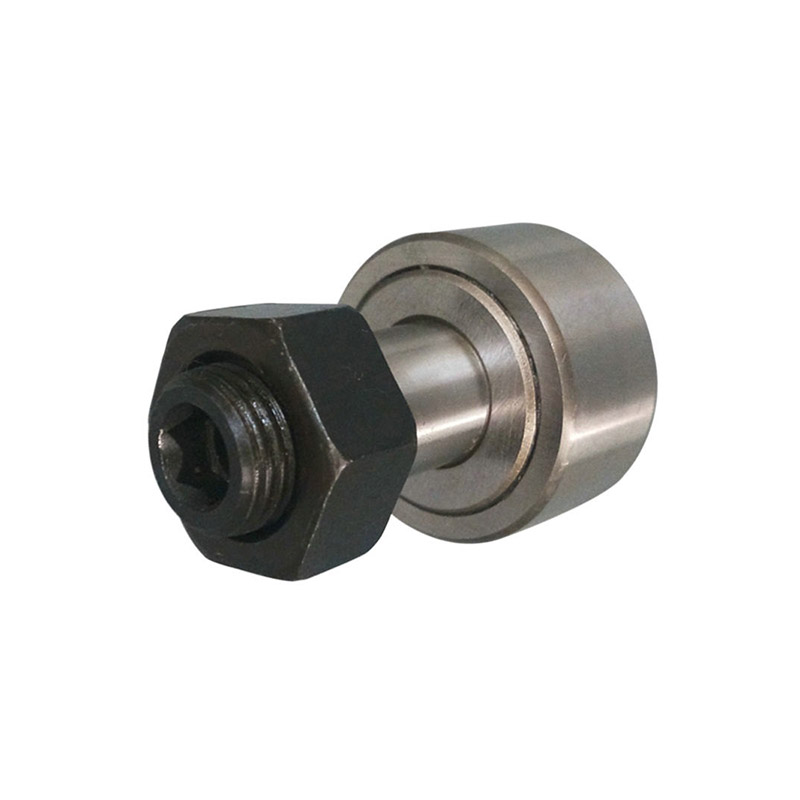
Design and Construction
The design of a stud roller bearing is such that it can accommodate high radial loads, but they are not typically used to handle axial loads. The rollers are usually made from high-carbon chromium steel, which is then heat treated to achieve a high hardness and wear resistance. The studs are also made from high-quality steel and are precision ground to ensure a perfect fit with the outer ring.
The outer ring can be a separate component or an integral part of the bearing housing. In some designs, the outer ring is split to facilitate easy assembly and disassembly. The bearing may also feature a cage or spacer to maintain the correct spacing between the rollers and to ensure uniform load distribution.
Applications
Stud roller bearings are used in a wide range of applications due to their compact size and high load capacity. Some common applications include:
Automotive components such as wheel bearings and transmission systems.
Industrial machinery like pumps, compressors, and conveyor systems.
Agricultural equipment for their durability and reliability under harsh conditions.
Construction machinery for their ability to handle heavy loads in a compact space.
Aerospace applications where weight and space are critical factors.
Advantages of Stud Roller Bearings
High Load Capacity: Due to the small diameter and high number of rollers, stud roller bearings can handle high radial loads.
Compact Design: They are ideal for applications with limited space.
Long Life: The high-quality materials and precision manufacturing result in a long service life.
Low Friction: The rolling elements have a lower friction coefficient than sliding bearings, which can lead to energy savings.
High Precision: The precision grinding of the components ensures consistent performance.
Installation and Maintenance
Proper installation is crucial for the performance and longevity of stud roller bearings. They should be installed with the correct alignment to avoid uneven load distribution and premature wear. Regular maintenance, including periodic inspection and lubrication, is necessary to ensure optimal performance.
Stud roller bearings offer a combination of high load capacity, compact design, and precision that makes them suitable for a wide range of applications. Their ability to operate efficiently in confined spaces and under high loads makes them a valuable component in the design of many mechanical systems. With proper installation and maintenance, these bearings can provide reliable service for the life of the equipment they are used in.
In summary, stud roller bearings are an essential component in the engineering world, offering a balance of strength, durability, and compactness that is hard to match. Their versatility and performance make them a preferred choice in many high-load, space-constrained applications, contributing to the efficiency and reliability of various industries.
FAQ:
Q: What are the main components of a stud roller bearing?
A: The primary components include: the outer ring (with hardened raceway), cylindrical rollers (full complement design), stud shaft (with threaded end for mounting), and optional seals or lubrication features. Some designs may include eccentric collars for adjustment.
Q: What's the difference between stud roller bearings and standard roller bearings?
A: Stud roller bearings are designed for direct track/cam following applications with built-in mounting studs, while standard roller bearings require separate housings. They typically have thicker outer rings and are optimized for high radial loads in compact spaces.
Q: What load capacities can stud roller bearings handle?
A: Load capacity varies by size and design, but typical stud roller bearings can handle radial loads from several hundred kilograms to over 10 tons, depending on the series and dimensions. Please refer to our product catalog for specific load ratings.
Q: What are the standard tolerance classes available?
A: We offer bearings with standard ABEC-1 (P0) precision, with options for higher precision grades (ABEC-3/P6) for applications requiring tighter tolerances and reduced runout.
Q: What materials are used in your stud roller bearings?
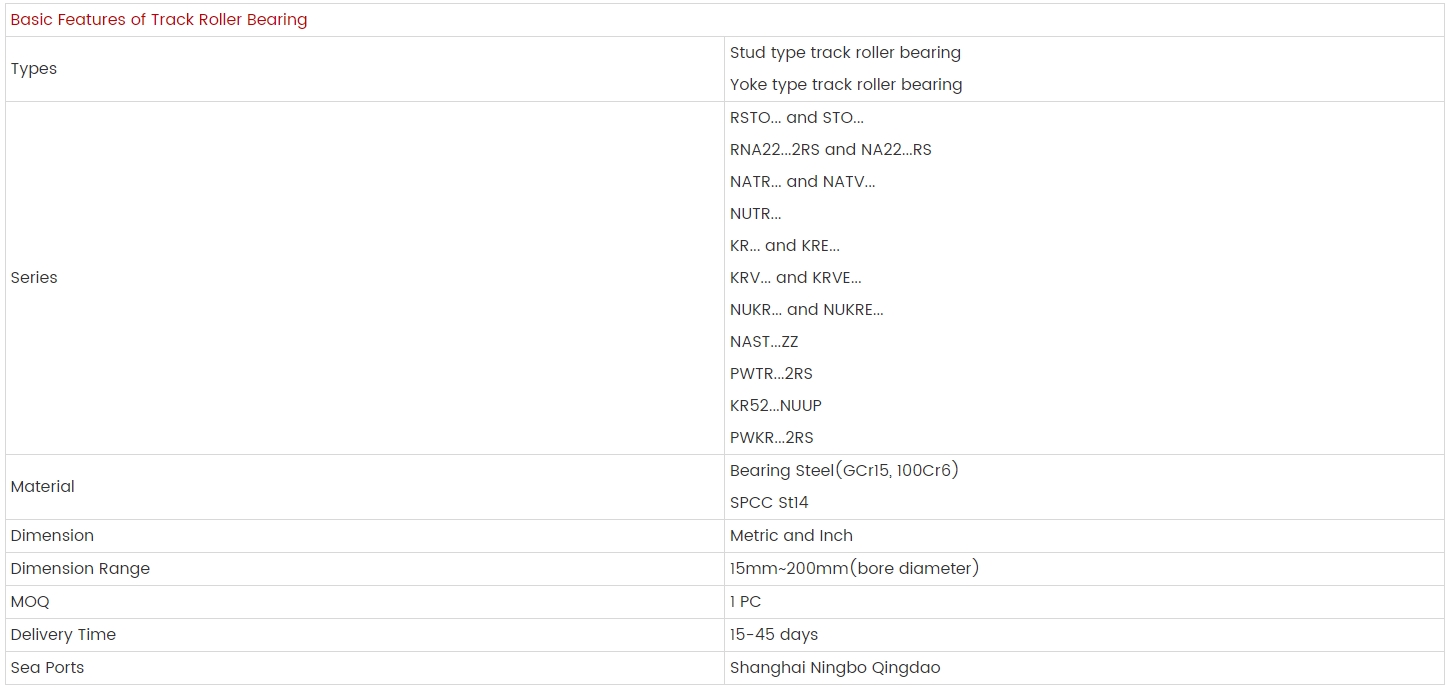
A: Our standard bearings feature chrome steel (GCr15/52100) outer rings and rollers for excellent wear resistance. Stud shafts are typically made of case-hardened steel. Special materials (stainless steel, ceramic coatings) are available for corrosive or high-temperature environments.


 Jul 29, 2024|
 View:1272


