


Electric motor bearing types, loads and applications
 Aug 31, 2026|
 View:218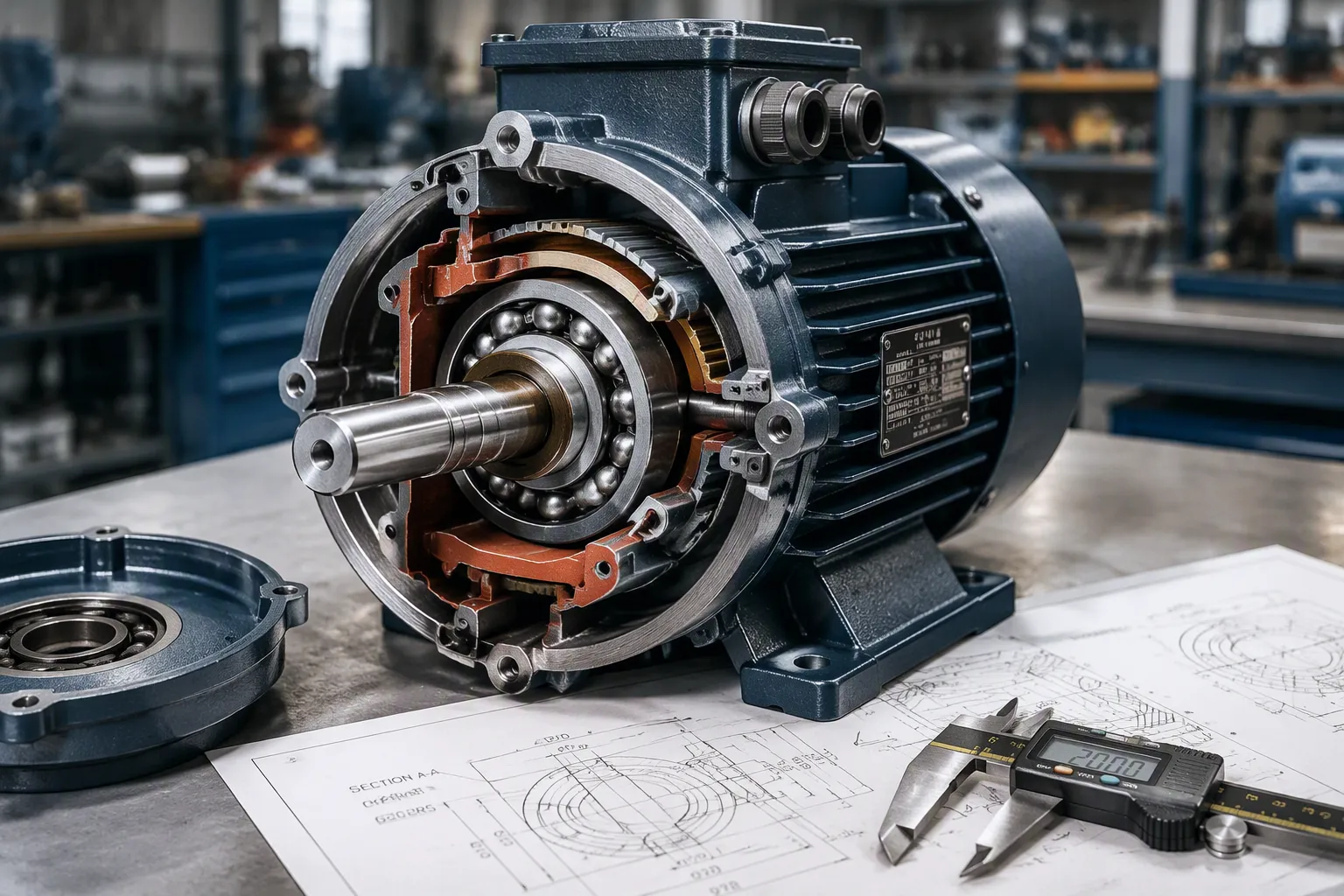
Bearings keep your electric motor running smoothly. They support the spinning shaft and cut down on friction. But bearing issues cause 51% of all electric motor failures, making them the top reason for breakdowns. Some sources say the number is even higher, up to 60% of motor failures.
You deal with two main load types. Radial load pushes at a right angle to the shaft, like belt tension on a pulley. Axial load pushes along the shaft, like fan blades pushing forward. Picking the wrong electric motor bearings for your load conditions leads to early wear and costly downtime.
This guide explains electric motor bearing types, how much load they can handle, and matching them to specific uses. Choosing bearings wisely prevents most failures.
Key Takeaways
More than half of motor breakdowns happen because bearings fail. Pick the right bearing to avoid expensive downtime.
Find out your main load type—radial, axial, or combined—so you can pick the correct bearing family.
deep groove ball bearings work well for medium loads. Roller bearings are good for heavy loads that push straight down. Angular contact bearings can handle loads that come from different directions at once.
Pick the right enclosure (open, shielded, or sealed) and lubrication method based on how fast it spins and where it is used.
Regular maintenance, like listening for noise, checking vibration, and watching temperature, helps bearings last much longer.
Radial vs. Axial Loads in Motors
Defining Radial and Axial Forces
Radial load pushes at a right angle to the motor shaft. Think of a belt drive system. The sheave (pulley) sits on the shaft, and the belt tension pulls sideways. That sideways force is an overhung radial load. It creates the main mechanical stress on your bearings in belted applications. Radial loads also show up in gear meshing, where teeth push against each other at right angles to the shaft. These forces are the most common load types you will see in electric motors.
Axial load, also called thrust, acts along the shaft. A vertically mounted motor gives a clear example. The rotor weight pushes downward along the shaft, creating a steady axial load on the lower bearing. Fan blades create thrust as they push air forward. Helical gears produce axial forces because their angled teeth slide against each other during meshing. You might face both load types at the same time in some applications.
A gearbox shaft experiences radial forces from gear meshing and axial forces due to helical gears, showing how helical gears create axial thrust loads.
How Load Types Affect Bearing Choice
Each bearing type handles different load types with varying capacity. You must match the bearing to your main force. For belted applications with motors rated 150 HP or higher, standard roller bearings support only radial loads. They are not suitable for axial loading. Cylindrical roller bearings handle radial loads well and also support high axial loads, making them flexible for medium to high-speed belt-driven motors.
Bearing Type | Suitability for Belt Drives (Radial Load) |
|---|---|
Cylindrical roller bearings | Well suited – designed to handle mostly radial loads |
Sleeve bearings | Not recommended – perform poorly under radial loads or in belted applications |
For combined loads, angular contact deep groove ball bearings excel. They handle both radial and axial forces with high precision, making them ideal for high-speed electric motors where both load types appear. Engineers calculate the equivalent dynamic load using formulas that combine both force parts. This calculation ensures the bearing's load ratings and L10 life meet your total load needs.
Understanding these load types guides your selection process. You must identify the main force direction first. Then you can choose the right bearing for your application. This knowledge prevents early failures and costly downtime.
Electric Motor Bearing Types
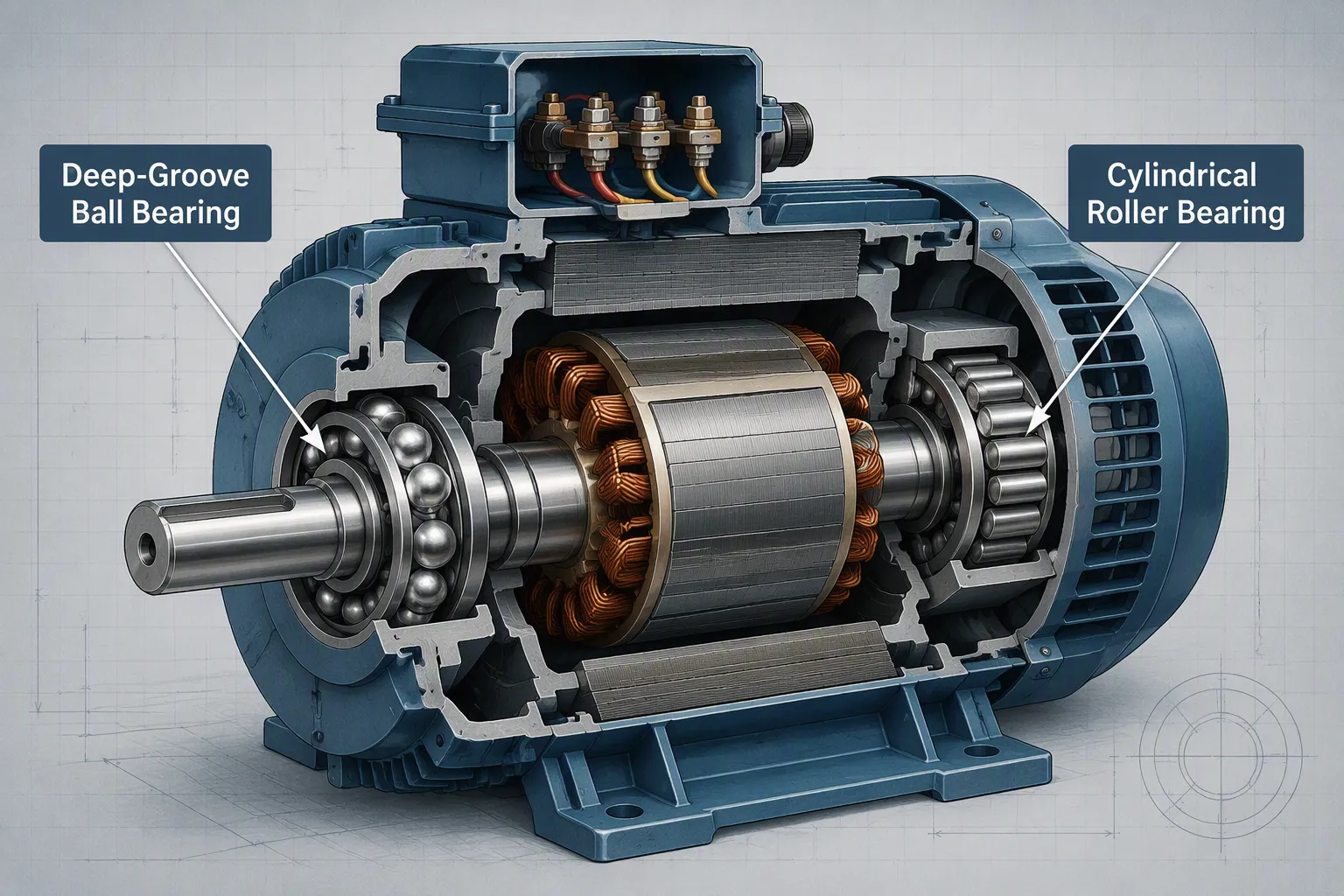
Types of Electric Motor Bearings: Ball vs. Roller
Deep groove ball bearings are most common in electric motors. They easily handle light to medium radial and axial loads. Deep groove ball bearings are the most flexible choice. They are made in many sizes to fit standard motor frames. Their point contact design lets them run at high speeds with very little friction. You can find them in small motors, pumps, and small fans.
Roller bearings are used when loads get heavier. Cylindrical roller bearings have line contact between rollers and raceways. This spreads the force over a larger area. So they can handle much more radial load than deep groove ball bearings. Electric motors often use these bearings because they carry heavy loads and still run efficiently. Cylindrical roller bearings work great in high-speed jobs where spreading the load is important.
Property | Deep-Groove Ball Bearing | Cylindrical Roller Bearing |
|---|---|---|
Radial load capacity (relative) | 1.0× baseline | 2.5–3.0× baseline |
Axial load capacity | Up to 50% of radial rating | Essentially zero unless flanged |
The load ratings show a clear difference. At 5 kN and 1800 RPM, a 6205 deep groove ball bearing gives about 34,000 hours of L10 life. An NU205 roller bearing under the same conditions lasts about 71,000 hours. That difference shows why roller bearings handle much heavier loads and are great for impact or shock. Ball bearings are still best for high-speed electric motors, while roller bearings carry heavier loads in gearboxes and conveyors.
Specialized Bearings for Combined Loads
Angular contact bearings handle both radial and axial loads at the same time. Double-row angular contact deep groove ball bearings carry radial loads, axial loads in both directions, and twisting loads all at once. Their back-to-back setup manages these forces in a small width. You can find them in vertical motors and spindle drives where space is tight.
Spherical roller bearings fix misalignment problems. They can adjust for up to 1.5 degrees of angular misalignment. This is useful in jobs with heavy loads and vibrations. The curved raceway in the outer ring lets the inner ring and rollers tilt inside the outer ring. This design handles shaft bending, which lowers stress on the bearing and other parts. Your equipment lasts longer and works more reliably.
Knowing the types of electric motor bearings helps you pick the right part for your load conditions. Deep groove ball bearings work for medium loads and high speeds. Roller bearings give high radial load capacity for heavy jobs. Special designs handle mixed loads and misalignment. This knowledge guides your choice and stops early failures.
Enclosures, Lubrication, and Specialized Bearings
Open, Shielded, and Sealed Bearings
Open bearings have no shields or seals. They allow maximum speed. Friction stays low and heat dissipates well. But you must lubricate them often. Contaminants can enter without barriers.
Sealed bearings come pre-lubricated for life. They need minimal to no maintenance. The tight barrier keeps contaminants out. This makes them ideal for dirty or outdoor conditions. However, sealed bearings have speed limits. For a maximum shaft size of 30 mm (size 306), the maximum speed is 3,600 rpm. The economic DN limit (bore mm × rpm) is 108,000. Beyond these limits, sealed bearings are not recommended. They have higher friction and poorer heat dissipation.
Bearing Type | Speed Suitability | Key Limitation |
|---|---|---|
Sealed | Medium to low speeds | Higher friction, poorer heat dissipation |
Open | High speeds |
Lubrication Methods for Longevity
Choosing the right enclosure and lubrication method prevents premature failure. You match the component type to your speed, load, and environment. This knowledge helps you select the correct bearing for your specific needs.
Selecting and Maintaining Electric Motor Bearings
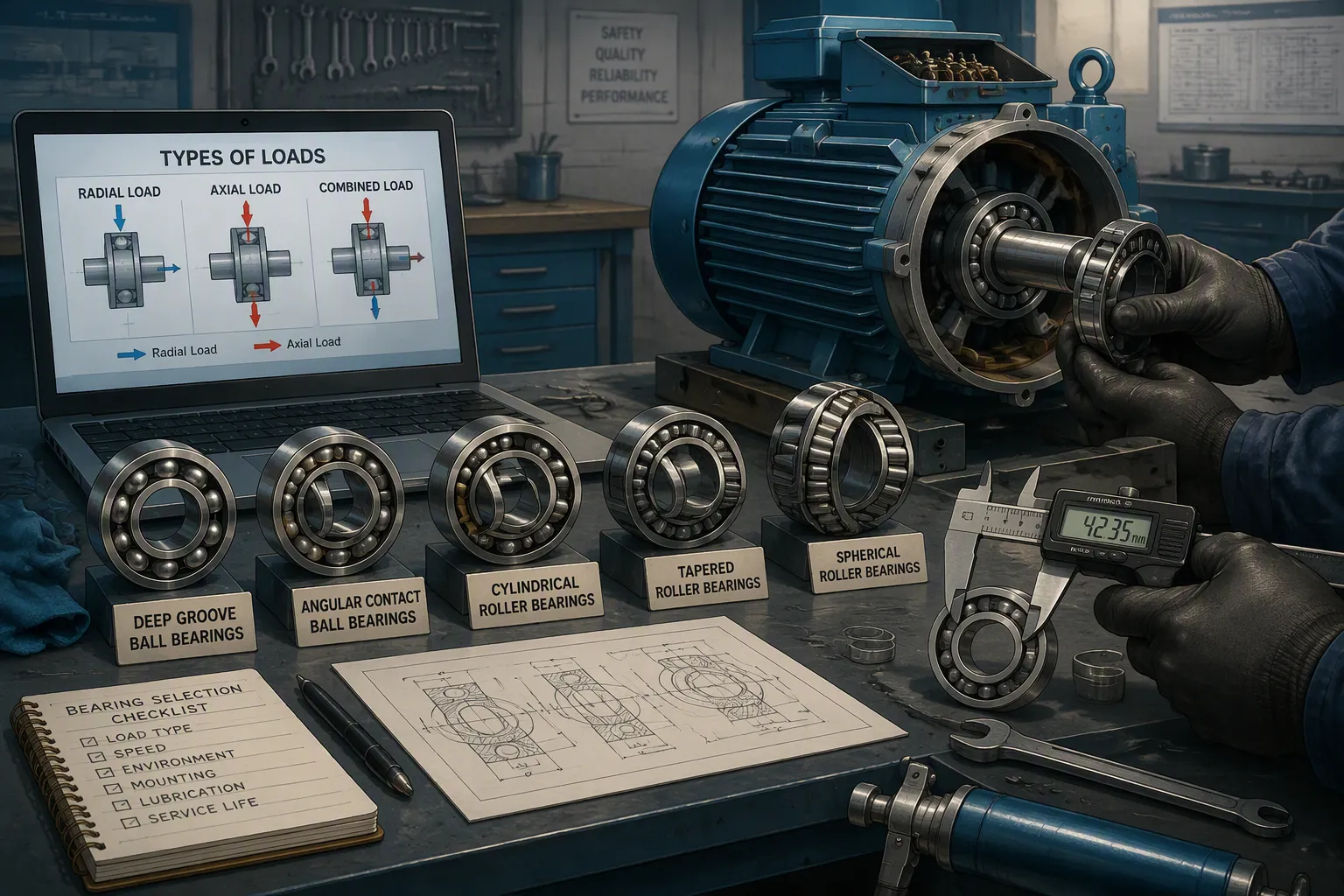
Key Selection Criteria: Speed, Load, and Environment
You need a clear plan to choose the right bearing. First, find out what kind of load you have and how big it is. Measure the force on your motor shaft. Decide if the force pushes sideways, along the shaft, or both ways. Figure out the weight, force, or twist involved. This first step guides all your later choices.
Match your load type to the right bearing group. For radial loads, suitable bearings include deep groove, cylindrical, and spherical roller bearings. For axial loads, angular contact bearings are suitable. For combined loads, angular contact and spherical roller bearings are suitable.
Next, think about speed. Deep groove ball bearings handle medium to high speeds and fit standard motors. Angular contact ball bearings reach very high speeds, so they work well for high-speed spindles. Cylindrical roller bearings carry heavy radial loads at speed and can also support high axial loads. Spherical roller bearings are suitable where misalignment is a concern.
Your work environment matters just as much. Dirt, dust, and debris cause wear and damage. For dirty areas with hard access, sealed-for-life bearings give the best protection.
For electric motors of 150 HP or more in belted applications, standard roller bearings are used. These bearings are made only for radial load support and cannot carry any axial load, so the axial load limit is zero.
This rule matters because belted motors create strong sideways forces from belt tension. Never put axial loads on these bearings. Doing so causes early failure and expensive downtime.
Maintenance Tips to Prevent Bearing Failures
Good selection and regular maintenance prevent most bearing failures and extend your motor's life.
Start by figuring out which load type is strongest and how big it is. Then match that force to the right electric motor bearing types. Deep groove ball bearings work well for moderate loads. Roller bearings handle heavy radial forces. Specialized designs deal with combined loads or misalignment. Last, pick your enclosure and lubrication based on speed and environment.
Choosing the right bearing and keeping up with maintenance stops most failures. These simple steps make your motor last much longer.
FAQ
How do I know which bearing type my motor needs?
First, find your main load. Check if the force pushes sideways (radial) or along the shaft (axial). Then match that force to the right bearing group. Deep groove ball bearings work for moderate loads. Roller bearings handle heavy radial forces. Angular contact bearings manage combined loads.
Can I use one bearing type for both radial and axial loads?
Yes. Angular contact bearings and spherical roller bearings handle both load types at the same time. But standard cylindrical roller bearings in belted motors rated 150 HP or higher support radial loads only. Do not put axial loads on these bearings.
How often should I lubricate my electric motor bearings?
It depends on your enclosure type. Open bearings need lubrication often. Sealed bearings come pre-lubricated for life and need no maintenance. Check your operating conditions and follow a regular schedule.
When should I consult a bearing manufacturer for custom solutions?
Contact a manufacturer when your application has unusual loads, extreme temperatures, or tight space limits. Manufacturers can offer custom solutions.
Recommended Products

6806 zz Deep Groove Ball Bearing 30x42x7 mm

16011 thin wall deep groove ball bearing 55x90x11 mm

6920 Open Deep Groove Ball Bearing 100x140x20mm

Special Thrust Ball Bearing 517/28zsv/Ya 28*51.7*16.8 Auto Part

6905 2RS Deep Groove Ball Bearing 25x42x9 Sealed

6311 C3 Deep Groove Ball Bearing 55x120x29mm

6000 2RS Deep Groove Ball Bearing 10x26x8 with Seals

6814 Thin Deep Groove Ball Bearing 70x90x10 mm

Deep Groove Ball Bearing with Flange Auto Part 243880d

6208 2RS | Deep Groove Ball Bearing 40x80x18


Recent News
1.What is a deep groove ball bearing
2024-01-092.HECB: A Reliable Importer of Deep Groove Ball Bearings
2024-05-073.Are needle roller bearings better than ball bearings?
2024-07-164.TOP 10 Deep Groove Ball Bearing Supplier & Stockist in 2026
2025-05-225.What are the benefits of deep groove ball bearings?
2025-05-26

