


What are axial roller bearing used for?
 Sep 06, 2024|
 View:701
Axial roller bearings are a specialized type of bearing designed to accommodate loads acting in the axial direction, that is, along the axis of the shaft. These bearings are crucial in various mechanical applications where precise control and support are required for axial loads. The following article provides a comprehensive overview of axial roller bearings, their applications, types, advantages, and considerations for their use.
Understanding Axial Roller Bearings
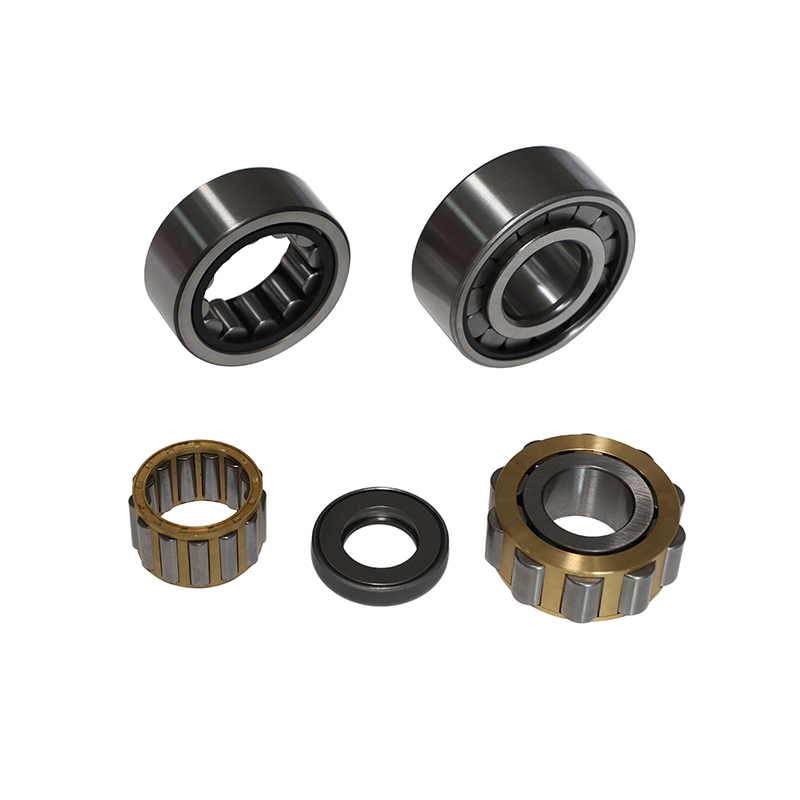
Axial roller bearings consist of an outer ring, an inner ring, and a set of cylindrical rollers. The rollers are guided by a retainer that holds them in place and allows them to roll smoothly. The primary function of these bearings is to reduce friction between moving parts and to support the load acting in the axial direction.
Types of Axial Roller Bearings
There are several types of axial roller bearings, each designed for specific applications:
Single-Row Axial Roller Bearings: These are the simplest form of axial roller bearings and are suitable for applications with relatively low axial loads.
Double-Row Axial Roller Bearings: Designed to handle higher axial loads, these bearings have two rows of rollers, which increase their load-carrying capacity.
Thrust Ball Bearings: While not roller bearings, thrust ball bearings are often used for axial loads and are similar in application. They consist of balls instead of rollers.
Thrust Needle Bearings: These are compact and lightweight, making them suitable for applications where space is limited.
Thrust Spherical Roller Bearings: These bearings combine the features of thrust bearings and spherical roller bearings, offering high load capacity and self-aligning capabilities.
Applications of Axial Roller Bearings
Axial roller bearings are used in a wide range of applications due to their ability to handle axial loads effectively. Some common applications include:
Automotive Industry: In vehicles, axial roller bearings are used in transmissions, differentials, and wheel hubs to support the axial loads and ensure smooth operation.
Aerospace: In aircraft, these bearings are used in control systems, landing gear, and propulsion systems where high precision and reliability are critical.
Industrial Machinery: In various types of industrial equipment, such as pumps, compressors, and conveyor systems, axial roller bearings support the axial loads and maintain alignment.
Construction Equipment: In cranes, excavators, and other heavy machinery, these bearings are used to handle the significant axial loads experienced during operation.
Power Generation: In turbines and generators, axial roller bearings are essential for supporting the rotors and maintaining their alignment under high loads.
Advantages of Axial Roller Bearings
High Load Capacity: Axial roller bearings are designed to handle high axial loads, making them suitable for applications with heavy-duty requirements.
Precision: The rolling contact between the rollers and the races ensures precise movement and minimal play, which is crucial in many mechanical systems.
Long Life: With proper lubrication and maintenance, axial roller bearings can have a long service life, reducing the need for frequent replacements.
Reliability: These bearings are designed to provide consistent performance, even under harsh operating conditions.
Compact Design: Axial roller bearings are compact, which makes them suitable for applications where space is limited.
Considerations for Using Axial Roller Bearings
When using axial roller bearings, several factors should be considered:
Load Requirements: The bearing should be selected based on the axial load it will need to support.
Speed: The bearing's design and materials should be suitable for the operating speed of the application.
Alignment: Proper alignment is crucial for the optimal performance and longevity of the bearing.
Lubrication: Adequate lubrication is essential to reduce friction and prevent premature wear.
Maintenance: Regular maintenance, including inspection and timely replacement of worn components, is necessary to ensure the bearing's performance.
Axial roller bearings play a vital role in various mechanical systems where axial load support is required. Their high load capacity, precision, and reliability make them a popular choice in industries such as automotive, aerospace, and industrial machinery. By understanding the types, applications, and considerations for using axial roller bearings, engineers can ensure the optimal performance and longevity of their mechanical systems. As technology advances, the design and materials of axial roller bearings continue to evolve, further enhancing their capabilities and expanding their range of applications.


